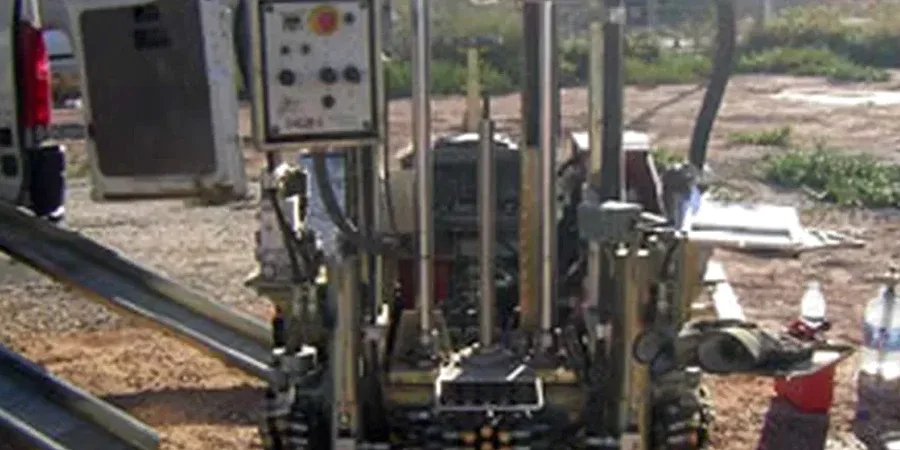
There is a thing about Jacksonville soil that catches people off guard, especially near the St. Johns River and the intracoastal. You drill 10 feet and hit sand, then 15 feet down you find a layer of soft organic silt that does not show up on a boring log unless you sample every inch. That is where the cone penetration test changes the game. We run CPT testing on projects from downtown high-rises to warehouse pads on the Westside, and the continuous data stream picks up those weak seams that SPT blow counts miss entirely. For geotechnical work in Florida, combining CPT soundings with a few targeted SPT borings gives you the stratigraphic resolution you need to size footings correctly and avoid surprises during excavation.
Continuous cone data catches the 6-inch peat lens that a split spoon sampler misses. In Jacksonville, that lens can be the difference between a passing slab and a lawsuit.
Local geotechnical context
We worked on a five-story mixed-use building off Philips Highway where the borings showed medium dense sand to 30 feet. The structural team sized spread footings at 3 ksf bearing. When we pushed a CPT rig on the same pad, the cone dropped through a 2-foot-thick layer of normally consolidated clay at 18 feet that the SPT sampler had blown right past. That clay seam would have settled differentially under load. The fix meant deepening the footings and adding a grade beam, which cost money, but it cost a fraction of what a post-construction repair would have run. Jacksonville has too many buried paleochannels and old marsh deposits to rely on spot samples alone. The cone gives you a near-continuous log, and on sites within a mile of the river or any of the creeks feeding it, that resolution is not a luxury. It is how you sleep at night.
Questions and answers
What does a CPT test cost in Jacksonville?
For a standard single-point CPT sounding with pore pressure measurement, budget between US$190 and US$270 per push, depending on depth, site access, and whether you need seismic cone or dissipation tests. Sites on the barrier islands or in tight downtown lots may carry a small mobilization surcharge.
How deep can you push a cone in Duval County soils?
Our standard 20-ton rig typically reaches 80 to 100 feet below ground surface. In loose sands near the coast we can go deeper; in the dense Hawthorn Group sediments west of I-295, refusal may occur shallower. We will tell you upfront if pre-drilling is likely.
Is CPT accepted by Jacksonville building officials?
Yes. The City of Jacksonville Building Inspection Division accepts CPT data when submitted as part of a geotechnical report signed and sealed by a Florida-licensed professional engineer. We provide the raw data and interpreted logs that your geotechnical engineer of record incorporates into the final report.
Do you need SPT borings if you already run CPT?
On most Jacksonville projects we recommend pairing CPT with at least one SPT boring. The cone gives you continuous stratigraphy and engineering parameters, but SPT provides a disturbed sample for visual classification and index testing. Together they give the geotechnical engineer what both methods lack individually.
Can CPT determine liquefaction potential for a site near the St. Johns River?
Absolutely. Seismic CPT measures shear wave velocity directly, and when combined with cone tip resistance and sleeve friction, you can run a Boulanger & Idriss (2014) or Robertson & Wride (1998) liquefaction triggering analysis. This is standard practice for sites in Jacksonville that fall within the NEHRP Site Class E or F categories.