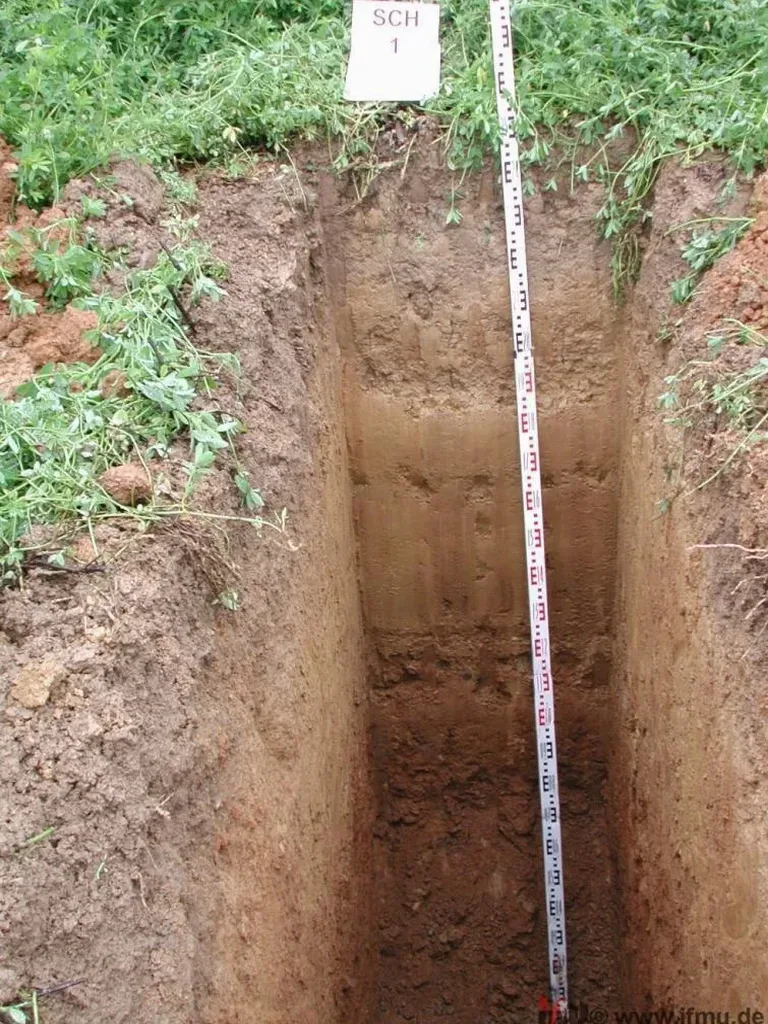
The soil profile beneath Jacksonville changes drastically within a mile. Over near the St. Johns River bluffs in Riverside, you might hit stiff Hawthorn Group clay at four feet; out west toward Baldwin, the surficial sand can run twelve feet deep before you see anything cohesive. That kind of variability is exactly why we open an exploratory test pit before committing to a foundation concept. Our field crew logs the stratigraphy in situ, photographs the pit face, and takes bulk samples at the depths that matter for your design. For projects near the Intracoastal Waterway where organic silt layers appear intermittently, we coordinate the pit observations with an SPT drilling program to tie the visual log to N-values. Every pit report includes GPS coordinates referenced to the 30.3262 latitude band, groundwater readings stabilized over at least twenty minutes, and a preliminary USCS classification of the material logged.
A well-documented test pit in Jacksonville's Hawthorn Group terrain reveals more about bearing and drainage than three borings logged blind.
Questions and answers
How deep can you go with a test pit in Jacksonville's sandy soil?
With a standard backhoe we reach 12 to 14 feet in the Pleistocene sand, but the practical limit in much of Jacksonville is groundwater, not machine capability. East of I-95 the water table often sits at 3 to 5 feet, so a pit deeper than 6 or 7 feet requires continuous pumping and benched sidewalls. With a larger track excavator and dewatering, we have opened pits to 18 feet for deep utility inspections, though OSHA Type C soil classification applies to most of the sand profile here and the excavation must be sloped or shielded accordingly.
What does a test pit cost for a residential lot in Jacksonville?
For a standard residential lot in Duval County, a single exploratory test pit with full logging, photography, groundwater observation, and a brief summary report typically runs between US$570 and US$900. Pricing depends on access conditions, the number of pits, and whether we are digging in clean sand or hitting the Hawthorn clay that slows excavation. Mobilization outside the I-295 loop may add a modest trip charge.
How soon after a pit is opened can you get me the field log?
We transmit the preliminary field log same-day, usually within two hours of completing the pit. The log includes depth intervals, USCS classifications, groundwater depth, penetrometer readings, and site photos with scale. If laboratory index tests are requested on the samples, those results follow in three to five business days and are appended to the final report.