← Home · Geophysics

MASW & VS30 Testing in Jacksonville, FL

Together, we solve the challenges of tomorrow.

LEARN MORE →

Jacksonville sits on a stack of marine terraces and coastal plain sediments. Sand, clay, and shell hash alternate underfoot. A lot of it is loose and saturated. Getting the Vs30 right here is not a formality. It defines your site class for the IBC. We run active-source MASW with 24-channel seismographs. The St. Johns River and its tributaries keep the water table high. That affects surface wave propagation. We adapt the array length to the site. A short spread for shallow bedrock. A longer one if the sand runs deep. This data feeds directly into the seismic design parameters required by ASCE 7. When we need to cross-check stiffness with a mechanical test, we combine the survey with an SPT drilling program to tie the shear wave velocity profile to blow count data. Jacksonville's seismic hazard is moderate, but the site amplification on soft soil can be significant.

Vs30 is the single most impactful number for your seismic site classification under the IBC. Don't guess it. Measure it.

How we work

The humidity and afternoon thunderstorms in Jacksonville can delay surface geophysics. We plan around the weather. The method itself is straightforward. A sledgehammer or weight drop generates surface waves. Geophones record the particle motion. We invert the dispersion curve to extract the shear wave velocity profile down to 30 meters. The output is Vs30. That number alone can save a project from a Site Class E or F designation. We have worked on sites near the Timucuan Preserve where the organic silt layer is thick. The contrast between that soft layer and the underlying Hawthorne Formation is sharp. The MASW profile captures that interface clearly. Our processing software handles multiple modes. Higher modes matter in these layered coastal settings. We also measure the fundamental site period from H/V spectral ratios when the survey geometry allows it. The field crew is small, two to three people, and we can cover a standard lot in about two hours. The harder part is clearing the line of roots and palmetto scrub.
MASW & VS30 Testing in Jacksonville, FL
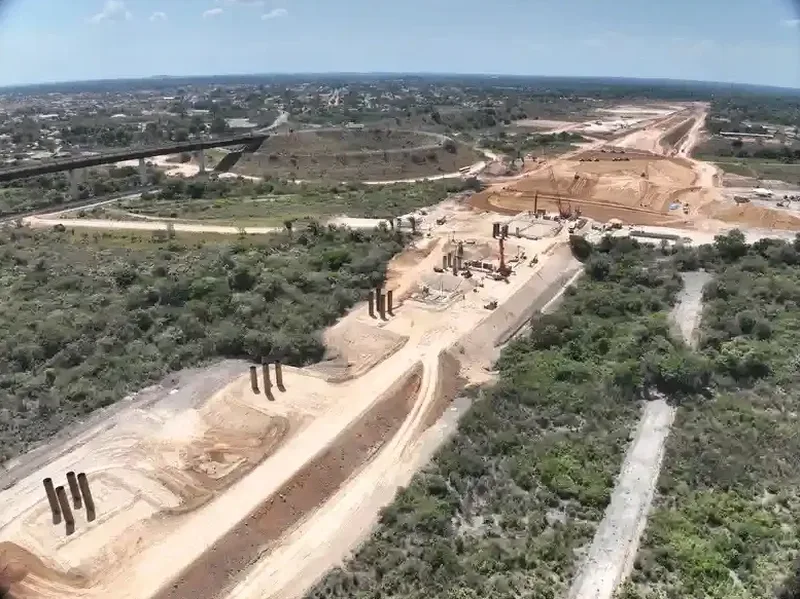
Technical reference image — Jacksonville

Local geotechnical context

Jacksonville's most recent notable shaking came from the 1886 Charleston earthquake, about 200 miles away. A repeat would hit the city's soft soils hard. The USGS seismic hazard maps show a site coefficient Fa that can exceed 1.6 for Site Class D soils. If your geotechnical report defaults to a generic Site Class D without measured Vs30, you could be overpaying for seismic load resistance or, worse, under-designing. Loose sands below the water table also carry a liquefaction potential. The MASW-derived Vs profile feeds directly into the simplified procedure by Seed and Idriss to estimate cyclic stress ratio. A low Vs30 under 180 m/s flags a site for further investigation. We have seen this in the mix of clean sand and silt near the Trout River. The correction is not trivial. You might need ground improvement or deep foundations. The cost of skipping the survey is a retrofit later. The cost of doing it right is a fraction of that.

Need a geotechnical assessment?

Reply within 24h.

Email: contact@geotechnical-engineering.vip

Typical values

ParameterTypical value
Measured depth range0–30 m (Vs30), deeper profiles optional
Source typeSledgehammer (standard), accelerated weight drop (urban sites)
Channel count24 vertical geophones (4.5 Hz)
Array length46 m or 69 m, site-dependent
Data product1D Vs profile, Vs30 value, dispersion curve, H/V spectrum
Site class determinationPer IBC Table 1613.2.3 & ASCE 7-22
Test standardASTM D7400 and IRIS/PASSCAL best practices

Complementary services

01

MASW survey for Vs30

Active-source MASW using a 24-channel land streamer or planted spread. We deliver the 1D Vs profile, the Vs30 value, and your IBC site class letter. Turnaround in three business days.

02

Seismic refraction tomography

P-wave refraction for rippability, bedrock topography, and groundwater mapping. Useful when the geotechnical boring log is ambiguous about refusal depth. We process with SeisImager.

Regulatory framework

IBC 2024 (Section 1613), ASCE/SEI 7-22 (Chapter 20: Site Classification), ASTM D7400-19 (MASW), FHWA-NHI-16-072 (geophysics manual)

Questions and answers

How much does a MASW survey cost in Jacksonville?

A standard MASW line for Vs30 on a residential or commercial lot in Jacksonville typically runs from US$1,890 to US$3,620. The price depends on site access, line clearing required, and the number of spreads needed to cover the parcel. We provide a fixed quote after a desktop review of your site.

What is the minimum site area needed for a MASW line?

A straight, cleared line of at least 46 meters is the minimum for a 24-channel spread with 2-meter spacing. If the lot is smaller or irregular, we can use a shorter array with 1-meter spacing, but the maximum depth resolution will decrease. We assess this during the site walk.

How do you handle the high water table in Jacksonville?

Surface waves are not damped by groundwater. The MASW method works well even with the water table at less than one meter depth. In fact, the velocity contrast between dry and saturated sand helps constrain the shallow Vs. The geophones are planted at the surface and do not need to be in contact with the water table.
Location and service area

We serve projects in Jacksonville and surrounding areas.

View larger map