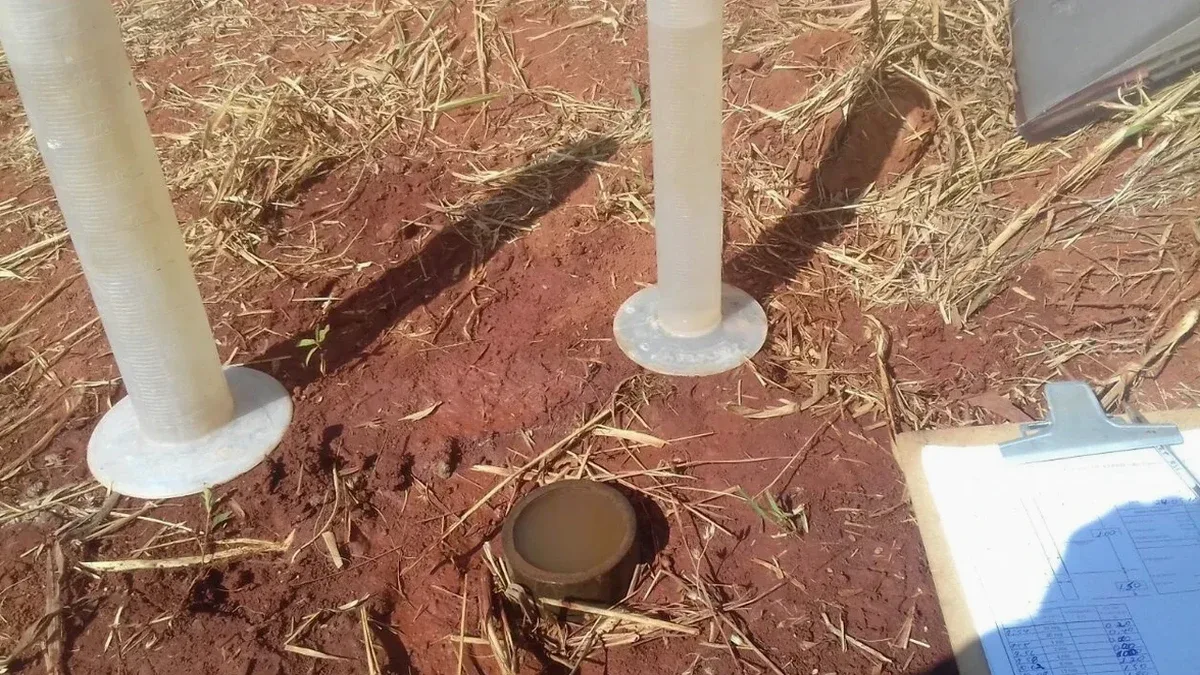
Jacksonville’s expansion across the St. Johns River basin and its barrier islands has pushed construction into some of the most variable subsurface conditions on the Florida peninsula. From the sandy highlands near Trail Ridge to the low-lying marsh deposits along the Intracoastal Waterway, water drives every geotechnical decision. Before sinking a deep foundation or designing a dewatering system, you need the actual hydraulic conductivity of the formation, not a lab estimate. That’s where our field permeability tests come in. We run Lefranc tests in soil and Lugeon tests in rock to measure how water moves through the ground under real field conditions. Combined with data from SPT drilling, the results give you a direct read on drainage, grouting requirements, and long-term seepage control. For a city that averages 50 inches of rain a year and sits just a few feet above sea level, permeability isn’t optional—it’s fundamental.
One Lugeon test in Jacksonville limestone can save a project from months of unplanned grouting—always test before you design.
How we work
The contrast between Jacksonville’s western uplands and the downtown riverfront is stark. Over in the Baldwin area, you might find a thin layer of sand overlying the Hawthorn Group clays, where a Lefranc test in the saturated zone can yield coefficients in the 10⁻⁵ to 10⁻⁶ m/s range. Head east toward the sports complex, and the soil profile shifts to loose alluvial sands and silts with permeability values often an order of magnitude higher. For these, we run constant-head or falling-head Lefranc variants depending on the grain size, following ASTM D6391 procedures. When the job hits the limestone bedrock that underlies much of the region, we switch to the Lugeon test, packing off the borehole in five-foot intervals and measuring water take at stepped pressures. The resulting Lugeon values tell you exactly where grouting is needed and at what pressure. No two sites behave the same, so the test program has to adapt to the formation, not the other way around.
Local geotechnical context
Jacksonville sits at an average elevation of just 16 feet above mean sea level, with a population exceeding 950,000 in the metro area. That combination puts enormous pressure on flood control and infrastructure durability. A permeability value that looks acceptable on a lab report can be dangerously optimistic when the Hawthorn Group confining layer turns out to be fractured or sandy. We’ve seen Lugeon values spike from 3 Lu to over 25 Lu across a single five-foot run, indicating an open solution channel that would have been invisible in a core sample. Ignoring such features leads to grout takes that blow the budget, or worse, underseepage that destabilizes an excavation wall. Our field tests are run with digital pressure transducers and flowmeters, giving you real-time curves that highlight fracture flow, dilation, or infilling. The data feeds directly into seepage models for cut-off wall design, dam safety reviews, and deep excavation support in Jacksonville’s high-water-table environment.
Questions and answers
How much does a field permeability test cost in Jacksonville?
A single Lefranc or Lugeon test interval typically runs between US$550 and US$950, depending on borehole depth, access, and number of test stages. Mobilization and borehole preparation are priced separately. We provide a fixed-fee proposal after reviewing your site location and project specs.
When should I use a Lugeon test instead of a Lefranc test?
Lugeon tests are for rock. If your Jacksonville project encounters the limestone or dolomite of the Floridan aquifer, you need packer testing to measure fracture conductivity. Lefranc tests are for soil—sands, silts, and clays—and are used when designing dewatering or evaluating seepage through unconsolidated materials.
What is a Lugeon unit and what does it mean for my design?
One Lugeon unit (1 Lu) equals a water take of 1 liter per minute per meter of test interval at 10 bars of pressure. Values below 3 Lu generally indicate tight rock requiring no grouting; values above 10 Lu suggest open fractures that need treatment. The pattern of the five pressure stages also reveals whether fractures dilate, wash out, or fill under pressure.
How long does a Lugeon test program take in the field?
A single five-stage Lugeon test interval takes roughly 45 to 60 minutes once the packer is set. A full borehole with five to six test intervals can be completed in one working day. We coordinate with your drilling contractor to minimize downtime and schedule testing as the hole advances.
Do Jacksonville's high groundwater levels affect the test results?
Yes, and we account for it. The shallow water table in much of Duval County means we carefully measure static water level before each test and correct for the natural groundwater pressure. This ensures the calculated hydraulic conductivity reflects the formation, not the ambient flow conditions.