← Home · Roadway

Flexible Pavement Design in Jacksonville: AASHTO 93, Asphalt Layers & Subgrade Performance

Together, we solve the challenges of tomorrow.

LEARN MORE →

Jacksonville's pavement network has to handle more than traffic. At 30.3° N latitude, the city gets 50 inches of rain annually on average, and the St. Johns River keeps the surficial aquifer barely six feet below grade across much of Duval County. A flexible pavement section designed without accounting for that moisture regime will rut within two summers. The AASHTO 1993 Guide for Design of Pavement Structures is still the backbone of our structural number calculations here, but we couple it with site-specific CBR testing because Florida's A-3 and A-2-4 sands lose bearing capacity fast when saturation exceeds optimum. We run layered elastic analysis when the truck fleet includes heavy refuse vehicles or port container haulers, which is common near Blount Island and the Dames Point corridor. Jacksonville's flat topography hides the problem: poor drainage, not weak soil, causes most premature fatigue cracking.

In Jacksonville, the difference between a 15-year pavement and a 5-year failure is usually the drainage detail, not the asphalt thickness.

How we work

A recent industrial park expansion off Pritchard Road showed the pattern. The site looked dry in February; by June, the water table had risen into the base course. We cored the existing asphalt and found stripping at the binder-aggregate interface — classic moisture damage. Our response combined three steps: undercut two feet of mucky sand, install edge drains with geotextile wrap, and switch the base aggregate to a crushed limestone with less than 8% passing the No. 200 sieve. The structural asphalt section used a PG 76-22 binder, which handles Jacksonville's 90°F-plus pavement surface temperatures without rutting. For sites where the subgrade CBR drops below 5, we often recommend a soil stabilization grouting program with cement or lime to create a working platform before placing the granular base. On larger commercial lots, the plate load test gives us modulus of subgrade reaction values that feed directly into the AASHTO equation, avoiding the uncertainty of empirical CBR correlations in saturated sands.
Flexible Pavement Design in Jacksonville: AASHTO 93, Asphalt Layers & Subgrade Performance
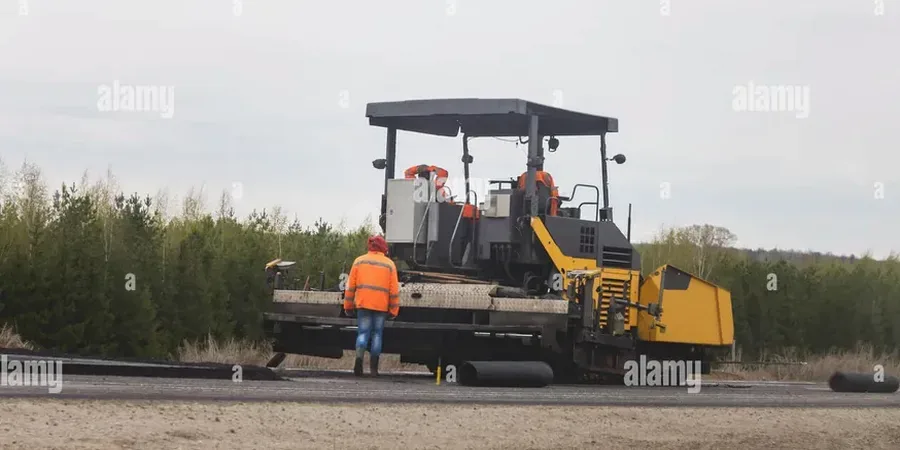
Technical reference image — Jacksonville

Local geotechnical context

The single biggest risk we see in Jacksonville flexible pavement design is saturation of the granular base. Once water gets trapped between the asphalt layer and a low-permeability subgrade, traffic loads generate pore pressure that pumps fines up into the base, eroding support under the asphalt. The failure mode looks like alligator cracking combined with deep ruts, and it accelerates after tropical storms. A pavement designed on dry-season CBR values without a drainage analysis is a liability. We specify edge drains or French drains on any site where the seasonal high water table is within three feet of the finished subgrade elevation. Jacksonville's afternoon thunderstorms from June through September can drop two inches of rain in an hour — the pavement cross-section has to shed that water laterally, not store it. Omitting permeability testing on the base aggregate is another common shortcut that leads to premature failure.

Need a geotechnical assessment?

Reply within 24h.

Email: contact@geotechnical-engineering.vip

Typical values

ParameterTypical value
Design methodologyAASHTO 1993 & FDOT Flexible Pavement Design Manual
Asphalt binder gradePG 76-22 (surface), PG 70-22 (intermediate/binder)
Minimum structural number (SN) for residential2.8 – 3.2
Minimum structural number (SN) for arterial/industrial4.0 – 5.2
Base course permeability≥ 150 ft/day (FDOT limerock or graded aggregate base)
Subgrade CBR threshold for stabilizationCBR < 5 at 95% modified Proctor
Tensile strength ratio (TSR) for moisture sensitivity≥ 80% per AASHTO T 283

Complementary services

01

AASHTO 93 Structural Design

Layer thickness optimization using traffic spectra (ESALs), terminal serviceability, and resilient modulus. We run iterative SN calculations for residential streets, collector roads, and heavy-duty industrial pavements accessed by port traffic.

02

Subgrade & Base Evaluation

CBR, resilient modulus, and Proctor testing on the natural subgrade. We test base course gradation, permeability, and LBR (Limerock Bearing Ratio) per FDOT FM 5-515 when Florida limerock is specified.

03

Asphalt Mix Verification

Marshall and Superpave volumetric design reviews, PG binder verification, and moisture sensitivity testing (TSR). We check the job mix formula against the structural demands of the specific Jacksonville site.

Regulatory framework

AASHTO Guide for Design of Pavement Structures, 1993 (with 1998 supplement), FDOT Standard Specifications for Road and Bridge Construction (Division 300 – Asphalt), ASTM D6927 (Marshall stability and flow of asphalt mixtures), ASTM D1883 / AASHTO T 193 (CBR of laboratory-compacted soils), AASHTO T 307 (Resilient modulus of subgrade soils and untreated base/subbase)

Questions and answers

How much does a flexible pavement design package cost for a commercial site in Jacksonville?

A full flexible pavement design package for a commercial lot in Jacksonville — including subgrade investigation, CBR testing, AASHTO 93 structural number calculations, drainage analysis, and pavement layer specification — typically ranges from US$1,530 to US$4,890. The spread depends on site size, number of borings, and whether we need to run resilient modulus testing or just CBR-based SN design.

Which asphalt binder grade performs best in Jacksonville's climate?

For surface courses in Jacksonville, we specify PG 76-22 to handle summertime pavement temperatures that routinely exceed 140°F. Intermediate and base asphalt layers can use PG 70-22. The high temperature grade (76°C) resists rutting during July and August, while the low temperature grade (-22°C) is adequate since Jacksonville rarely drops below 25°F. For heavy truck lanes, polymer-modified PG 76-22 is our standard recommendation.

What is the minimum asphalt thickness for a residential driveway in Jacksonville?

For a standard residential driveway on Jacksonville's sandy subgrades, we recommend a minimum of 3 inches of asphalt concrete (two lifts: 1.5-inch surface over 1.5-inch binder) over 6 inches of compacted graded aggregate base. If the driveway will see heavy vehicles like RVs or delivery trucks, we increase to 4 inches of asphalt. The base layer is non-negotiable — it separates the asphalt from the moisture-sensitive A-3 sand and provides a working platform during construction.

How does high groundwater affect flexible pavement design in Jacksonville?

High groundwater is the number one variable in Jacksonville pavement design. When the seasonal high water table is within 3 feet of the subgrade surface, we add two measures: a geotextile separator between the subgrade and base course to prevent fines migration, and edge drains to lower the water table laterally. We also increase the base course thickness by 20-30% compared to a well-drained site. Without these adjustments, saturation under traffic loading causes base erosion, loss of support, and alligator cracking within the first 3-5 years.
Location and service area

We serve projects in Jacksonville and surrounding areas.

View larger map